Demographic Pressure and Planetary Boundaries: An Assessment of the Systemic Repercussions of Global Overpopulation

Demographic Pressure and Planetary Boundaries: An Assessment of the Systemic Repercussions of Global Overpopulation
The rapid expansion of the global human population—from approximately 1.6 billion at the opening of the twentieth century to 8.2 billion in 2024—represents one of the most transformative macro-ecological events in the history of the Earth system1. Early demographic theory posited that population growth would eventually be arrested by absolute arithmetic constraints on food supply. Modern Earth system science, ecological economics, and environmental epidemiology reveal a far more systemic reality: demographic expansion acts as a pervasive stress multiplier across interconnected biophysical cycles, resource bases, municipal infrastructure networks, and international security architectures2.
Aggregate demographic growth exerts severe pressure on the biophysical operating space of the planet, accelerating deforestation, freshwater overabstraction, and soil degradation2. Concurrently, this physical expansion intersects with structural economic inequality. While population growth is concentrated in developing nations where it strains local municipal governance and essential natural resources, the atmospheric and biogeochemical destabilization of the planet remains disproportionately driven by high per capita consumption in industrialized nations1. Assessing the systemic consequences of overpopulation requires evaluating this interplay across ecological, pedological, epidemiological, and demographic domains.
Ecological Disruption: Habitat Encroachment, Deforestation, and Biosphere Integrity
The expansion of the human footprint has fundamentally altered terrestrial biomes, converting natural ecosystems into heavily modified anthropogenic landscapes to secure food, timber, and living space2. Between 1970 and 2020, wild vertebrate populations declined by an average of 69%, a biological contraction that coincided precisely with a doubling of the human population from roughly four billion to eight billion2. Today, intact natural habitat has been severely fragmented; less than 23% of the planet's terrestrial landmass (excluding Antarctica) and only 13% of the oceans remain functionally free from intense human disturbance3.
This systematic land conversion has reorganized global mammalian biomass. Millennia of human expansion, accelerating sharply over the industrial era, have driven an 83% reduction in wild mammal biomass and an estimated 50% contraction in aggregate global plant biomass3. Domesticated livestock and humans currently constitute approximately 96% of all mammalian biomass on Earth, leaving wild mammals to comprise just 4% of the global total3.
Deforestation functions as both a primary mechanism and a critical feedback loop within this ecological displacement2. Across the tropical belts of South America, Sub-Saharan Africa, and Southeast Asia, demographic growth directly correlates with primary forest clearance for smallholder subsistence farming, commercial cattle pastures, and feed monocultures2. Forest clearance isolates remaining ecological patches, generating extensive edge effects that desiccate forest interiors, elevate tree mortality, alter microclimates, and accelerate defaunation2.
Furthermore, escalating population density adjacent to formally protected areas severely limits their conservation efficacy2. Demographic momentum around national parks and ecological reserves frequently leads to protected area downgrading, downsizing, and degazettement (PADDD) to accommodate human settlement, grazing, and logging10. The direct exploitation of wildlife and the destruction of continuous canopy cover—both direct functions of aggregate human numbers and agricultural expansion—stand as the primary drivers propelling the biosphere toward a sixth mass extinction event2.
| Ecological Metric | Pre-Anthropogenic Baseline | Contemporary State | Primary Demographic Driver |
|---|---|---|---|
| Wild Mammal Biomass | ~100% of global mammalian stock | ~4% of global mammalian stock3 | Conversion of wildlife habitat to pasture and feed cropland3 |
| Anthropogenic Mammal Biomass | Negligible (<0.1%) | ~96% (Humans and Livestock)3 | Scaling agricultural production to sustain human populations3 |
| Intact Terrestrial Landmass | ~100% (excl. Antarctica) | <23% classified as wilderness3 | Expansion of agricultural belts, transport corridors, and settlements2 |
| Global Wetland Extent | Historical baseline distribution | >85% decline in total area3 | Drainage for irrigation, rice cultivation, and urban sprawl3 |
| Wild Vertebrate Abundance | Stable natural population baseline | 69% mean reduction (1970–2020)2 | Direct exploitation, defaunation, and widespread habitat destruction2 |
Hydrological Depletion and Agricultural Land Degradation
The interaction between demographic expansion and the hydrological cycle has created acute localized and regional water stress6. Agriculture is the most water-intensive human enterprise, accounting for 72% of all freshwater withdrawals globally, compared to 16% utilized for municipal purposes and 12% by industrial operations6. Between 2000 and 2018, as the global population grew, internal renewable freshwater resources (IRWR) per capita contracted globally by approximately 20%11. The sharpest drops occurred in rapidly growing regions with low baseline water endowments, falling by 41% in Sub-Saharan Africa, 30% in Central Asia, and 29% in Western Asia11.
This declining per capita availability has forced agricultural systems into severe groundwater overdraft11. Groundwater abstraction accounts for more than 30% of total agricultural water demand and continues to expand at approximately 2.2% annually11. In key global breadbaskets that support dense populations, such as the Indo-Gangetic Plain, the North China Plain, and the Middle East, extraction rates regularly exceed the annual recharge rate of underlying aquifers11.
When extraction exceeds recharge over sustained periods, hydrostatic pressure collapses, triggering water table decline, escalated pumping energy costs, structural land subsidence, and the irreversible compaction of porous aquifer rock12. In coastal zones, this depression in groundwater levels reverses hydraulic gradients, inducing saltwater intrusion that contaminates freshwater reservoirs and permanently degrades them for irrigation and municipal use12.
Concurrently, the demand for crop production degrades the terrestrial soil base4. Over 1.2 billion people currently live in agricultural regions facing severe water constraints, while more than 60% of irrigated cropland operates under high or very high water stress6. With little uncultivated prime land remaining, agricultural systems intensify output through double-cropping and flood irrigation in arid zones7.
This practices draw saline groundwater upward via capillary action, causing secondary soil salinization and waterlogging that progressively poison root zones12. Globally, approximately 12 million hectares of agricultural land are abandoned each year due to severe degradation, erosion, and desertification4. The Food and Agriculture Organization (FAO) reports that these systems are reaching their physical breaking points, facing slowing productivity gains precisely as global demand for food, livestock fodder, and biofuel is projected to rise 50% by 2050 to meet demographic needs7.
| Region or Basin | Sectoral Water Stress Level (SDG 6.4.2) | Primary Hydro-Pedological Pathology | Interplay with Demographic Pressure |
|---|---|---|---|
| Northern Africa | >100% (Critical overdraft)11 | Deep aquifer exhaustion, agricultural runoff salinization, coastal seawater intrusion11 | Withdrawals outpace natural annual internal replenishment to support food security11. |
| Central and South Asia | >70% (High to Critical stress)11 | Unregulated tube-well pumping, irrigation-induced waterlogging, extensive secondary soil salinity11 | High agrarian population density requires continuous multi-cropping using non-renewable fossil water11. |
| East and Western Asia | 45% – 70% (Substantial stress)11 | Aquifer depletion, urban-rural water competition, structural land subsidence11 | Expanding municipal sectors compete directly with irrigated agriculture for limited basin allocations11. |
| Sub-Saharan Africa | Highly variable; acute local deficits | 41% per capita decline in internal water resources (2000–2018), low infrastructure buffering capacity6 | High population growth rates outpace civic water delivery infrastructure, amplifying vulnerability to climatic shocks6. |
Biogeochemical Cycles and Planetary Boundary Transgression
The sheer scale of human biomass and its associated agricultural systems has driven Earth system processes past safe ecological thresholds15. The planetary boundaries framework defines the biophysical thresholds within which humanity can safely develop16. Multiple boundaries have already been transgressed into high-risk uncertainty zones, led by the disruption of biogeochemical flows of nitrogen () and phosphorus (), alongside biosphere integrity, land-system change, and novel entities18.
Sustaining the caloric requirements of over eight billion individuals depends heavily on the chemical synthesis of nitrogenous fertilizer via the Haber-Bosch process and the mining of finite phosphate rock reserves18. The volume of reactive nitrogen and phosphorus applied to global soils exceeds the planet's natural assimilative capacity by several hundred percent18. Crop plants take up only a fraction of these chemical inputs; the excess leaches into surface streams, rivers, and coastal margins through agricultural runoff7.
This influx of nutrients causes extensive aquatic eutrophication, driving massive algal blooms that consume dissolved oxygen during decomposition and form expansive hypoxic "dead zones" in coastal marine ecosystems7. Beyond aquatic damage, the microbial breakdown of excess synthetic nitrogen generates high volumes of nitrous oxide (), a greenhouse gas with a warming potential roughly 300 times greater than carbon dioxide (), as well as a leading agent of stratospheric ozone depletion3. Demographic growth forms the underlying baseline scalar of these biochemical flows: as aggregate population expands, agricultural systems are structurally prevented from lowering synthetic application rates without precipitating immediate regional grain shortfalls7.
Epidemiological Dynamics, Sanitation Deficits, and Public Health Risks
High population density, informal urbanization, and anthropogenic frontier expansion create conditions favorable to the emergence, transmission, and persistence of infectious diseases23. Pathogenic transmission in epidemiological systems depends on host density and contact rates26. When demographic growth concentrates millions of individuals in dense, poorly serviced urban settings, natural barriers against pathogen transmission are compromised24.
Municipal sanitation infrastructure across much of the developing world has been outpaced by demographic growth5. More than 80% of global industrial and municipal wastewater is discharged directly into the environment without treatment9. The absence of comprehensive sanitation networks sustains continuous transmission pathways for waterborne and fecal-oral pathogens, including Vibrio cholerae, Salmonella enterica serovar Typhi, dysentery, and poliovirus23. In high-density settings lacking clean running water, the physical feasibility of hygiene and clinical isolation breaks down, turning localized outbreaks into widespread urban epidemics23.
Simultaneously, overpopulation alters disease ecology along undisturbed forest peripheries3. As agricultural activities, timber extraction, and informal settlements expand into natural ecosystems, the human-wildlife-livestock interface becomes more dense and porous3. This ecological disturbance significantly elevates the frequency of zoonotic spillover events25.
The fragmentation of natural biomes often eliminates apex predators while favoring opportunistic, fast-reproducing reservoir species—such as bats, rodents, and small carnivores—that harbor diverse viral pathogens3. The harvesting of wild bushmeat, combined with intensive livestock production along ecological margins, creates repeated transmission opportunities for novel coronaviruses, filoviruses, and zoonotic influenza strains24. Once established in an overcrowded peri-urban population, an emerging pathogen can exploit high spatial contact rates and international transport links to transition rapidly from a localized spillover into a global pandemic25.
Socio-Economic Pathology: Hyper-Urbanization, Housing Insecurity, and Infrastructure Strain
Demographic growth is distributed unequally between rural and urban areas5. Rapid population growth in rural agrarian zones, combined with soil degradation, water scarcity, and agricultural parcel fragmentation, creates strong rural-to-urban migration pressures28. Urban centers in developing regions absorb these demographic inflows without possessing the necessary municipal tax base, planning capacity, or capital reserves required to expand infrastructure28.
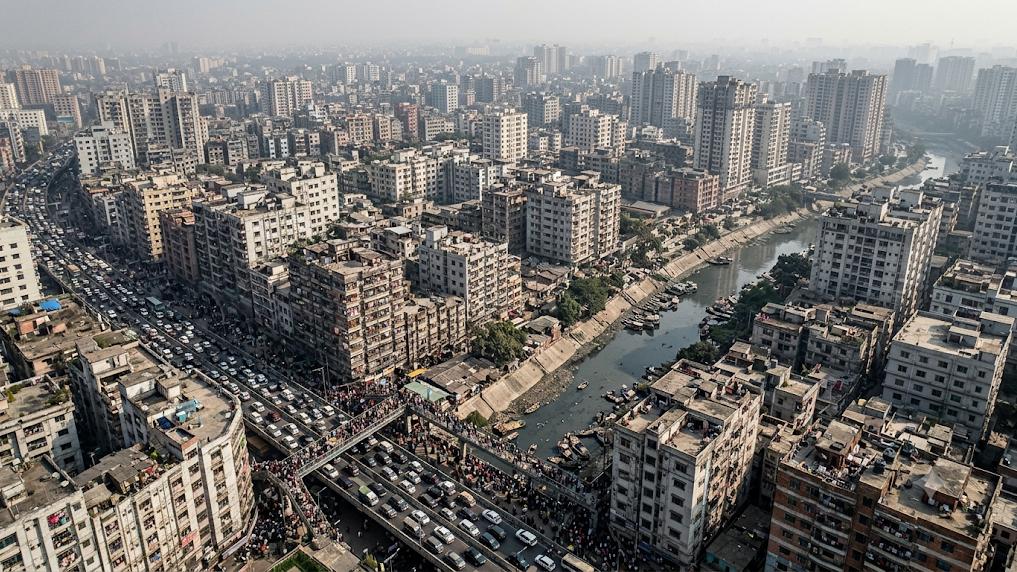
This structural shortfall drives hyper-urbanization characterized by the proliferation of informal settlements and slums5. In 2024, approximately 1.16 billion people—nearly one in every four urban inhabitants—lived in slums or informal settlements lacking clean drinking water, sanitation facilities, structurally sound housing, security of tenure, and adequate living space5.
Projections indicate that without major public investments and housing reforms, the global population of informal settlement dwellers will exceed 1.2 billion by 20305. Although the relative proportion of urban dwellers living in slums has declined slightly in some areas due to targeted upgrade initiatives, high population growth has driven an increase in the total absolute number of individuals living in acute informality5.
Municipal infrastructure networks in rapidly expanding metropolitan areas face chronic operational overcapacity28. Urban transportation grids become paralyzed by congestion, public transit systems operate beyond safety thresholds, and electrical networks experience rolling brownouts28. Furthermore, urban land consumption historically outpaced population growth rates, resulting in low-density, uncoordinated urban sprawl that invades surrounding prime agricultural lands and environmentally hazardous terrain, such as steep slopes and floodplains5.
This uncoordinated expansion isolates lower-income residents in under-serviced peripheries28. In these contexts, the classic economic benefits of urban agglomeration—such as productive labor pooling and technological spillovers—are overwhelmed by negative externalities: severe air pollution, lost economic productivity from transit congestion, youth underemployment, and the expansion of unprotected, informal labor markets28.
| Geographic Region | Slum and Informal Population (2024) | Dominant Civic Infrastructure Shortfall | Spatial and Environmental Vulnerabilities |
|---|---|---|---|
| Central and Southern Asia | ~340 million33 | Insecure land tenure, deficit of piped municipal potable water5 | Extreme exposure to fine particulate air pollution and acute basin water stress11 |
| Eastern and South-Eastern Asia | ~370 million33 | Severe housing unaffordability, high spatial crowding, migrant service restrictions28 | Sprawl across vulnerable coastal river deltas subject to marine surge and flooding7 |
| Sub-Saharan Africa | ~254 million33 | Severe absence of piped sanitation, unmanaged drainage, lack of grid power5 | High settlement vulnerability to seasonal flash floods, extreme heat, and waterborne disease outbreaks23 |
| Global Aggregate | 1.16 billion (23.2% of urban population)5 | Chronic structural deficit of formal, serviced, affordable housing5 | Expansion of informal housing into ecologically sensitive catchment zones5 |
Geopolitical Friction, Transboundary Resource Competition, and Forced Migration
As natural resources decline on a per capita basis under demographic pressure, the risk of social conflict and geopolitical destabilization increases4. Ecological scarcity rarely acts as the sole driver of armed conflict; rather, it operates as a threat multiplier that interacts with weak governance, institutional corruption, ethnic tensions, and economic inequalities to destabilize fragile regions31.
The environmental decline of the Lake Chad Basin in the central African Sahel illustrates this socio-ecological dynamic36. Spanning parts of Cameroon, Chad, Niger, and Nigeria, the basin sustains over 40 million people whose livelihoods depend on fishing, pastoralism, and flood-recession agriculture36.
A combination of upstream river dams, shifting rainfall patterns, and rising regional temperatures caused the lake's open water body to contract by over 90% from its 1960 footprint36. As riparian populations expanded rapidly, competition for the receding water body and exposed fertile soils intensified37.
Nomadic pastoralists, displaced southward by environmental degradation, increasingly clash with sedentary crop farmers over access to grazing corridors and watering points37. This structural resource collapse, institutional vacuum, and economic dislocation created conditions that violent extremist organizations, including Boko Haram, have exploited to recruit disenfranchised youths, extract fees from fishing and agricultural trade, and maintain operational strongholds in inaccessible wetland terrain36.
Transboundary river basins face similar hydropolitical tensions39. The Nile River basin connects eleven riparian states, functioning as the primary freshwater lifeline for northeastern Africa39. Rapid demographic expansion in upstream Ethiopia—which supplies more than 80% of the Nile's flow via the Blue Nile—spurred the construction of the Grand Ethiopian Renaissance Dam (GERD) to provide hydroelectric power for a growing population and industrial base39.
Downstream, Egypt relies almost entirely on the Nile for its domestic water supply and municipal irrigation, supporting a population exceeding 105 million people situated within a narrow river valley and delta11. The filling and long-term operation of the GERD during extended regional droughts poses significant risks to Egypt's agricultural security, driving ongoing diplomatic tensions and periodic security alerts between the two nations39.
These environmental and hydrological pressures contribute directly to human displacement31. Globally, sudden-onset weather disasters and chronic environmental degradation displace an average of 21.5 million people annually31. By 2026, nearly 90 million forcibly displaced individuals worldwide were concentrated in regions highly vulnerable to climate change and resource scarcity, where competition with local populations over firewood, groundwater, and arable land frequently sparks localized tensions31.
The Consumption-Demography Nexus: Population Scale Versus Per Capita Ecological Footprint
A rigorous scientific analysis of overpopulation requires evaluating the relationship between absolute population numbers and per capita resource consumption2. The aggregate anthropogenic footprint is traditionally expressed through the IPAT identity:
where total environmental impact () is the product of population size (), affluence or per capita consumption volume (), and the technological efficiency of production systems ()2. The relative weight assigned to population () versus affluence () remains a central debate in ecological research and international climate policy2.
Demographic trajectories and resource consumption patterns are distributed unequally around the world1. United Nations population projections indicate that the global population will peak within the current century, reaching approximately 10.3 billion people in the mid-2080s before declining gradually to 10.2 billion by 21001.
The global total fertility rate (TFR) fell from 3.31 live births per woman in 1990 to 2.25 in 2024, and is projected to fall below the replacement threshold of 2.1 by the late 2030s1. More than half of all nations globally now record fertility rates below replacement level1. Demographic patterns have bifurcated: 63 countries (including China, Germany, and Japan) have already passed their demographic peaks, whereas ongoing population growth is concentrated in a subset of developing countries, primarily in Sub-Saharan Africa, where regional population is projected to expand nearly three-fold from 1.2 billion to 3.4 billion by the close of the century1.
Although developing regions account for the majority of current population growth, their per capita greenhouse gas emissions and material throughput remain low8. Empirical assessments by Oxfam and the Stockholm Environment Institute show that in 2019, the wealthiest 1% of the global population was responsible for 16% of total global carbon emissions—a share equivalent to the combined emissions of the poorest 66% of humanity, or roughly five billion people46.
The richest 10% generated approximately 50% of global emissions, whereas the poorest 50% contributed just 8% of the global total46. A single individual in the top 0.1% of global earners emits more carbon in a single day (over 800 kg of ) than someone in the bottom 50% produces across an entire year (averaging 2 kg of per day)8.
| Global Income Decile or Tier | Share of Global Population | Share of Global Consumption Emissions (2019) | Per Capita Emissions Characteristics |
|---|---|---|---|
| Top 0.1% | 0.1% (~8 million people) | 4.5% of total emissions46 | Extreme emissions (>800 kg /day), driven by luxury aviation, superyachts, and carbon-intensive investment portfolios8 |
| Top 1% | 1.0% (~80 million people) | 16.0% of total emissions46 | Over 100 tonnes /year; equal to the collective emissions of the poorest 66% of humanity46 |
| Top 10% | 10.0% (~800 million people) | 49.8% (~50%) of total emissions46 | High-consumption lifestyle, private vehicle reliance, frequent aviation, and high animal-protein diets48 |
| Middle 40% | 40.0% (~3.2 billion people) | 43.0% of total emissions48 | Urban industrial and working populations across emerging market economies48 |
| Bottom 50% | 50.0% (~4.0 billion people) | ~8.0% of total emissions46 | Subsistence-level emissions (~2 kg /day), high vulnerability to climatic extremes8 |
This empirical divide reveals two distinct structural dynamics through which population pressures manifest. In high-fertility, lower-income nations, demographic expansion functions primarily as an internal developmental and ecological burden, driving the localized exhaustion of critical, non-substitutable resources: topsoil, municipal water supplies, sanitation systems, and local biodiversity2. In these countries, rapid population growth dilutes public capital investments, keeping large segments of the population trapped in poverty and under-serviced informal housing5.
Conversely, in low-fertility, high-income societies, the environmental crisis is driven by systemic planetary overshoot3. Despite stable or shrinking domestic populations, these affluent economies consume disproportionate shares of global material resources and atmospheric carbon budgets, driving global climate disruption, marine resource depletion, and chemical contamination3.
Consequently, expanding access to voluntary family planning and female secondary education is vital to relieving localized resource and infrastructure pressures in high-fertility developing regions1. However, demographic stabilization alone cannot resolve global environmental crises unless high-income populations drastically curtail their per capita material and energy consumption2.
Systemic Conclusions
Global overpopulation represents a structural, self-reinforcing challenge that cannot be resolved through isolated technical or economic interventions. The evidence synthesized across ecological, hydrological, epidemiological, and demographic disciplines highlights several interconnected realities. Human demographic expansion and its supporting agricultural systems remain the dominant drivers of the ongoing extinction event, reducing wild mammal biomass to a marginal fraction and fragmenting tropical biomes2.
Concurrently, the convergence of agricultural aquifer depletion, structural soil salinization, and an informal settlement population exceeding 1.1 billion individuals indicates that physical systems and civic infrastructure networks are reaching their operational limits5. In vulnerable regions, resource scarcity acts as a catalyst for political instability, violent extremism, and forced migration, as demonstrated across the Lake Chad and Nile River basins36.
Addressing this multi-faceted crisis requires policy interventions tailored to differing demographic and economic realities. For high-fertility developing nations, priority must be given to accelerating voluntary demographic transitions through investments in female education, reproductive health services, maternal care, and formal urban upgrading programs1.
Simultaneously, affluent economies must move away from growth models reliant on high material and carbon throughput, implementing structural carbon limits, progressive taxation on polluting consumption, and circular resource management8. Only through a coordinated approach that tackles localized demographic pressures and global consumption disparities concurrently can human society transition toward a sustainable state within the biophysical boundaries of the Earth system2.
Works cited
- World Population Prospects 2024: Summary of Results
- (PDF) Population Effects on Biodiversity and Climate Change
- BIODIVERSITY AND CLIMATE CHANGE - IPBES
- LAND DEGRADATION AND RESTORATION - IPBES
- SDG Goals - UN Statistics Division
- Water Scarcity | UN-Water
- (PDF) The state of the world's land and water resources for food and
- Climate Plunder
- 1 An Overview of the IPBES Global Assessment on Biodiversity and
- Population Effects on Biodiversity and Climate Change
- Water scarcity - FAO Knowledge Repository
- Chapter 2. Groundwater degradation and the limits of hydrological
- FAO Report: State Of Worlds' Land And Water Resources
- Scarcity and degradation of land and water: growing threat to food
- Planetary boundaries - Wikipedia
- Planetary boundaries - Stockholm Resilience Centre
- Planetary Boundaries and the Food System - LoginEKO
- Planetary Boundaries - Issues of Sustainability
- Sustainable Development and Planetary Boundaries
- (PDF) Planetary Boundaries: Exploring the Safe Operating Space for
- PLANET BOUNDARIES - Compassion in Food Business
- Transforming food systems to return to Earth's limits
- Sanitation - World Health Organization (WHO)
- Urban health - World Health Organization (WHO)
- Preventing the next pandemic: Zoonotic diseases and how to break
- High-Density Communities and Infectious Disease Vulnerability
- Urbanization and Infectious Diseases: General Principles, Historical
- (PDF) Urbanization and Slum Formation - ResearchGate
- Preventing the next pandemic : - United Nations Digital Library
- Habitat-III-Issue-Paper-22_Informal-Settlements-2.0.pdf
- Water, Migration and Conflict
- Urban Development | World Bank Group
- WORLD CITIES REPORT 2026 - UN-Habitat
- World Cities Report 2024 - UN-Habitat
- Environmental dimensions of conflict in the Lake Chad region - NUPI
- Environmental dimensions of conflict in the Lake Chad region
- Local Conflicts over Resources around Lake Chad
- Climate Change Loss and Damage: A Lake Chad Basin Case Study
- Hydropolitics in a Warming World: The GERD & the Future of Nile
- CLIMATE CHANGE, WATER SCARCITY AND MIGRATION (CWSM)
- (PDF) Water Scarcity and Conflict in African River Basins
- 90 million displaced people at risk from climate threats, UN refugee
- A person from the richest 0.1% produces more carbon pollution in a
- New UN population projections: Where are we headed?
- World Fertility 2024 - UN.org
- Climate Equality: A Planet for the 99% - Oxfam France
- Climate Equality: A planet for the 99% - Oxfam
- Carbon Inequality Kills: Why curbing the excessive emissions of an
- Carbon Inequality
- Ultra-rich 0.1% produce more carbon pollution than nearly ... - Oxfam
- World Population Prospects 2022 - the United Nations
- Richest 1% emitted as much as poorest 66%, enough to cause 1.3